Showing posts with label Environmental Health. Show all posts

Tuesday, 10 December 2013

THE GREAT GREEN WALL OF AFRICA

The Great Green Wall initiative is a pan-African proposal to “green” the continent from west to east in order to battle desertification.  It aims at tackling poverty and the degradation of soils in the Sahel-Saharan region, focusing on a strip of land of 15 km (9 mi) wide and 7,500 km (4,750 mi) long from Dakar to Djibouti.  


Populations in Sahelian Africa are among the poorest and most vulnerable to climatic variability and land degradation.  They depend heavily on healthy ecosystems for rainfed agriculture, fisheries, and livestock management to sustain their livelihoods.  These constitute the primary sectors of employment in the region and generate at least 40 percent of the gross domestic product (GDP) in most of the countries.  Additionally, the ecosystem provides much needed livelihood products, such as fuelwood and bushmeat.  Unfortunately, increasing population pressures on food, fodder, and fuelwood in a vulnerable environment have deteriorating impacts on natural resources, notably vegetation cover.  Climate variability along with frequent droughts and poorly managed land and water resources have caused rivers and lakes to dry up and contribute to increased soil erosion. 

The vision of a great green wall to combat ecological degradation was conceived in 2005 by the former President of the Federal Republic of Nigeria, Chief Olusegun Obasanjo, and the idea was strongly supported by President Abdoulaye Wade of Senegal. The vision evolved into an integrated ecosystem management approach in January 2007, when the African Union adopted declaration 137 VIII, approving the “Decision on the Implementation of the Green Wall for the Sahara Initiative”. In June 2010, Burkina Faso, Chad, Djibouti, Eritrea, Ethiopia, Mali, Mauritania, Niger, Nigeria, Senegal and Sudan signed a convention in Ndjamena, Chad, to create the Great Green Wall (GGW) Agency and nominate a secretary to further develop the initiative. 

The participating countries hope that by linking national-level efforts across borders, they will tackle policy, investment, and institutional barriers that exacerbate the effects of climate change and variability, leading to desertification and deterioration of the environment and natural resources and the risk of conflicts between communities. International Colloquiums are held to discuss possible barriers as well as share available knowledge on the vegetal species, systems of development, and GGW monitoring updates1.

The GEF emulates the spirit of collaboration by allowing participating GGW countries to prioritize which projects they want to implement, in conjunction with GEF agencies and their partners.  They may “develop one or several projects in the context of this program and assign some or all of their financial allocations to the Great Green Wall[1]”.

Progress is apparent especially in the Zinder region of Niger, where tree density has significantly improved since the mid-1980s.  GEF CEO Monique Barbut attributes the success to working with farmers to find technical solutions, particularly long-term land and financial solutions, in order to save the trees.  This form of natural regeneration benefits local communities and the global environment alike by increasing crop yield, improving soil fertility, reducing land erosion, improving fodder availability, diversifying income, cutting wood collection time for women, strengthening resilience to climate change, increasing biodiversity, and much more. 

The Global Environmental Facility (GEF) has granted $100.8 million[2] to the GGW participating countries to expand sustainable land and water management (SLWM) and adaptation in targeted landscapes and in climate vulnerable areas in West African and Sahelian countries.  Each country will design a project based on national-level priorities for GEF and LDCF resources.  The projects will support the following activities
  • Expand investment in SLWM technologies to help communities adapt production systems to climate variability, generate income and livelihoods, secure global public goods (such as retention of greenhouse gases, nitrogen fixation, groundwater recharge and biodiversity), and reduce impacts from erosion, drought, and flooding.
  • Improve land-use planning, such as at watershed scale (i.e. Nigeria) or local levels (i.e. grazing reserves).
  • Improve and apply the information base: climate and water monitoring network improvements, ICT (information communication technology) innovations, institutional cooperation within and across countries, and evidence based policy development
UPDATES: 
The Great Green Wall of the Sahel, still in the planning stages, will span Africa from Senegal to Djibouti in order to reverse desertification of the Sahel eco-system, and will look much like this image of a local re-forestation initiative in Chad.
The initiative will be ongoing, and has garnered the support of several international organisations including the UK's Royal Botanic Gardens, the World Bank, the African Union, and the UN’s Food and Agriculture Organisation. Together they have pledged $3 billion and the expertise of their botanists for its advancement.
"Examples of success [so far] include more than 50,000 acres of trees planted in Senegal,” says Ryan Schleeter at National Geographic. "Most of these are the acacia species Senegalia senegal, which has economic value for the commodity it produces, gum arabic. (Gum arabic is primarily used as a food additive.) A small portion of the trees are also fruit-bearing, which, when mature, will help combat the high levels of malnutrition in the country’s rural interior.”
Even more dramatic is the project’s potential social impact, says Schleeter. By providing better quality land and more opportunities to earn an income from cultivating it, the Great Green Wall will open up thousands of job opportunities to the local population.
References:

Monday, 2 December 2013

Incorporation of cigarette butts into nests reduces nest ectoparasite load in urban birds: new ingredients for an old recipe?

Abstract

Birds are known to respond to nest-dwelling parasites by altering behaviours. Some bird species, for example, bring fresh plants to the nest, which contain volatile compounds that repel parasites. There is evidence that some birds living in cities incorporate cigarette butts into their nests, but the effect (if any) of this behaviour remains unclear. Butts from smoked cigarettes retain substantial amounts of nicotine and other compounds that may also act as arthropod repellents. We provide the first evidence that smoked cigarette butts may function as a parasite repellent in urban bird nests. The amount of cellulose acetate from butts in nests of two widely distributed urban birds was negatively associated with the number of nest-dwelling parasites. Moreover, when parasites were attracted to heat traps containing smoked or non-smoked cigarette butts, fewer parasites reached the former, presumably due to the presence of nicotine. Because urbanization changes the abundance and type of resources upon which birds depend, including nesting materials and plants involved in self-medication, our results are consistent with the view that urbanization imposes new challenges on birds that are dealt with using adaptations evolved elsewhere.

1. Introduction

Urbanization is increasingly interesting to biologists as it causes significant changes to species composition, species interactions, and ecological and evolutionary processes [1,2]. Because organisms residing in cities are exposed to different environmental conditions from those in which they evolved, it is relevant to investigate how populations cope with such differences. Parasites affect most aspects of their hosts’ life history and are an important evolutionary force [3,4]. Potential changes in host–parasite interactions as a consequence of urbanization may thus influence which species are most able to exploit urban landscapes.
A variety of parasites cohabit with birds. Of these, ectoparasites are taxonomically widespread, and have severe negative impacts on host condition, reproductive performance and survival [35], both because of their direct effects (e.g. blood-sucking) and indirect effects (e.g. transmission of endoparasites) on avian health. These selective pressures have favoured the evolution of defence mechanisms such as complex immune systems or specific antiparasite behaviours [3,4]. Self-medication is an antiparasite behaviour in which substances produced by other organisms are exploited to increase fitness [6]. For example, some bird species incorporate aromatic plants into their nests, and it has been proposed that the volatile secondary compounds contained therein may either have antiparasitic properties [710] or stimulate the nestlings’ immune system [11].
Urbanization changes the abundance and type of resources available to birds, including nesting materials [12,13]; nest contents of urban birds represent a shift from natural to anthropogenic nesting materials [14]. In nests of some urban birds, cellulose cigarette butts are commonly found [1517]. Butts from smoked cigarettes retain substantial amounts of nicotine and other compounds that may also act as arthropod repellents [18]. Prominent among these is the alkaloid nicotine. This is an antiherbivore chemical derived from the tobacco plant (Nicotiana sp.), and has been used as an arthropod repellent in some crops [19] and for the control of ectoparasites in poultry [20]. Consequently, we hypothesized that cigarette butts may act as an ectoparasite repellent in the nests of urban birds. We conducted field measurements and an experimental field manipulation to evaluate the prediction that the presence of cigarette butts in nests reduces the abundance of nest-dwelling ectoparasites.

2. Material and methods

The study was conducted in an urban population of house sparrows (Passer domesticus; HOSP) and house finches (Carpodacus mexicanus; HOFI) breeding at the campus of the National University of Mexico (UNAM) in Mexico City during the reproductive season of 2011. Both multi-brooded species are widely distributed in cities and are known to incorporate cigarette butts in their nests [15,16].
A thermal trap was placed to attract ectoparasites in nests of HOSP (n = 27) and of HOFI (n = 28) during their second breeding events. This consisted of a battery (12 V/17 A), heating two resistors (37°C) that were situated at opposite sides of the nest. Resistors were fitted with adhesive tape so that parasites became stuck as they reached the source of heat. The cellulose fibres from a smoked (experimental) or a non-smoked cigarette filter (control) were attached to the resistors. To standardize the experimental treatment, smoked filters were obtained from a single 400-pack of regular filter cigarettes (Marlboro) consumed by an artificial smoking device. Traps were left for 20 min in each nest, then the adhesive tapes were collected in individually labelled plastic bags and stored at 4°C until any attached ectoparasite was counted under the microscope (Karl Zeiss Stemi DV4). Nest content (empty, eggs, nestlings) was recorded.
Immediately after chicks fledged, 28 nests of HOSP and 29 nests of HOFI were carefully collected in individually labelled sealed plastic bags and stored at room temperature; nests collected during a week were processed the following weekend. We weighed each nest, assessed the nature and quantity of materials it was composed of, and quantified the number of ectoparasites it contained using Berlese funnels for 24 h under constant temperature and illumination (from a 60 W incandescent lamp; [21,22]). Mites were collected in vials containing 70 per cent ethanol and counted under the microscope as above. We quantified the contribution of cigarette butts as the total weight of cellulose fibre per nest. Ectoparasite abundance was the total number of mites collected. To evaluate differences in ectoparasite abundance between treatments, we used variance component analyses, including nest as a random factor and treatment and nest content as fixed factors. To test for an association between ectoparasite abundance and the weight of cellulose in nests, a general linear model was performed including species as categorical predictor. Analyses were performed using STATISTICA software.

3. Results

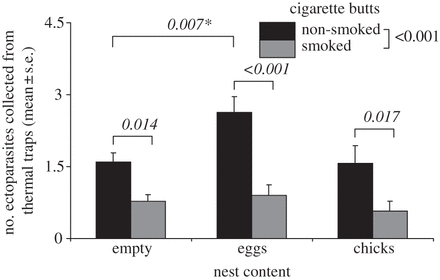
HOSP nests were heavier (43.70 ± 24.34 g) than HOFI nests (26.22 ± 12.53; F1,55 = 11.74, p = 0.001). Cellulose from cigarette butts was present in 89.29 per cent of HOSP and 86.21 per cent of HOFI nests, and weighted on average 2.45 ± 3.34 g (range 0–11.75) and 3.06 ± 4.15 g (range 0–14.86) in HOSP and HOFI nests, respectively. On average, HOSP nests included eight (range 0–38) and HOFI nests 10 (0–48) used cigarette butts [23]. Neither the presence nor the amount of cellulose per nest differed between species (all p > 0.55). The number of mites was not different between HOSP and HOFI nests (F1,54 = 0.22 p = 0.64). In both species, parasite abundance was negatively associated with cellulose weight (F1,54 = 17.31, p = 0.0001; figure 1). Traps containing cellulose from smoked butts attracted significantly fewer ectoparasites than traps with non-smoked cellulose (F1,54 = 43.13, p < 0.0001; figure 2). Also, control traps in nests containing eggs gathered more parasites than those in empty nests or in nests with nestlings (F2,52 = 3.74, p = 0.03; see electronic supplementary material).
Figure 1.
Number of parasites, C. mexicanus (grey circles) and P. domesticus (black circles), was a negative function of the amount of cigarette butt material contained in the nest. Asterisk (*) represents regression line from an exponential model fitted to the data from both species.
Figure 2.
Thermal traps with smoked butts attracted fewer mites than traps with non-smoked butts, regardless of the nest content. Non-smoked butts gathered more parasites from nests assayed during incubation than from empty nests or (non-significantly) than after hatching, presumably as some parasites remained attached to the chicks. Probability values from a variance component analysis (global) and from post hoc Bonferroni-corrected comparisons between treatments and nest contents. Probabilities in italics from Bonferroni-corrected individual comparison.

4. Discussion

We provide evidence that urban birds incorporate cellulose from smoked cigarette butts into the nest and that this behaviour entails a reduction in the number of nest-dwelling ectoparasites. It appears that this effect may be due to the fact that mites are repelled by the nicotine, perhaps in conjunction with other substances, because thermal traps laced with cellulose from smoked butts attracted fewer ectoparasites than traps laced with non-smoked cellulose.
This novel behaviour observed in urban birds fulfils one of the three conditions necessary to be regarded as self-medication: it is detrimental to parasites [6]. However, to determine that this behaviour amounts to self-medication, it would be necessary to demonstrate that cigarette butts are deliberately collected and incorporated into nests because of their detrimental effect on parasites, and that such detrimental effect on parasites leads to an increase in host fitness.
The similarity between butt cellulose nest-lining and the use of green plant material in the nests of several species [711] suggests that the former may indeed be an urban manifestation of pre-existing behaviour, and it would be interesting to investigate whether HOSP and HOFI use green plant material in their nests (outside or within the cities). Alternatively, the use of cellulose from cigarette butts may be due to other properties of the cellulose (e.g. as a thermal insulator) unrelated to the effect of nicotine on ectoparasites. Presumably, both new and smoked butts can provide thermal insulation, but only the latter would protect against ectoparasites, thus a choice test under controlled conditions could be used to disentangle which is the primary function of this behaviour. Birds could distinguish smoked and non-smoked butts from their scent, just as some birds that use the chemical compounds of plants as defence against parasites appear to rely on olfaction to collect those with effective chemicals [24]. Thus, we propose that olfaction must be involved if the collection of cigarette butts by urban birds is a translation to the urban medium of a pre-existing adaptation against nest parasites.
Smoked cigarette butts contain a large number of toxic substances, including traces of pesticides [25]. Such pesticides, however, cannot explain why fewer mites were attracted to the thermal traps containing smoked butts, an effect that is consistent with nicotine being an arthropod repellent (figure 2). Nonetheless, those chemicals are in contact with the birds at the nest, and their toxicity could potentially counterbalance any benefits that may result from the reduction of ectoparasites occasioned by lining the nest with cigarette butts.

Acknowledgements

Vianey Palomera, M. Méndez-Janovitz, J. J. Zúñiga-Vega and E. Ávila-Luna helped in various parts of this project, constituting the BSc thesis of M.S.R. supervised by C.M.G.

Monday, 21 October 2013

Bhopal Disaster

Overview
In 1984, the accidental release of 40 metric tons of methyl isocyanate from a Union Carbide pesticideplant in the heart of Bhopal, India killed thousands of people and injured hundreds of thousands.

Toxicological Perspective


The methyl isocyanate poisoning of Bhopal, India had many disastrous consequences. Hundreds of thousands of people were injured and around 15,000 died. The toxicological and environmental problems are ongoing. Due to a lack of political willpower, the toxic waste from the disaster has still not been cleaned up. Higher rates of Cancer and diseases affecting the central nervous system, liver, and kidneys were witnessed. Also, water analysis is poor due to continued contamination from benzene hexachloride and Mercury that persists to this day.


Background

The Union Carbide plant was established in Bhopal in 1969 and it began to produce the insecticide Carbarylmethyl isocanyte is an ingredient of carbaryl, and on the morning of December 3, 1984, a holding tank containing 43 tons of methyl isocyanate overheated and released the toxic gas. Because methyl isocyanate is heavier than air, it traveled over the ground through the Bhopal city center. The transportation system collapsed, and many people were trampled to death in a mad rush to flee the visible gases. In total, 15,000 people died and 150,000-600,000 people were injured.
The contamination and deaths were a result of numerous factors:
  • Recent documents obtained through discovery in the course of a lawsuit against Union Carbide for environmental contamination (before a New York Federal District Court) revealed that Carbide had exported "untested, unproven technology" to the Indian plant. Unlike Union Carbide plants in the USA, its Indian subsidiary plants were not prepared for problems. No action plans had been established to cope with incidents of this magnitude. This included not informing local authorities of the dangers of chemicals used and manufactured at Bhopal.
  • Reports issued months before the incident by scientists within the Union Carbide corporation warned of the possibility of an accident almost identical to that which occurred in Bhopal. The reports were ignored outright and never made it to senior staff. Due to falling sales, staff had been laid off and safety checks became less and less frequent.
  • Slip-blind plates that would have prevented water from pipes being cleaned from leaking into the MIC tanks via faulty valves were not installed. Their installation had been omitted from the cleaning checklist.
  • At the time of the event, the MIC tank refrigeration unit was disabled to save money, and some of its coolant was being used elsewhere. A simple press of a button in the control room would have activated it to at least use the remaining coolant, but this was overlooked by staff.
  • The gas scrubber was placed on standby, and therefore did not attempt to clean escaping gases with sodium hydroxide (caustic soda), which may have brought the concentration down to a safe level.
  • The water curtain that may have reduced the concentration of the gas was only set to ~13 m and did not reach the gas; it was not designed to contain a leak of such magnitude. Though the audible external alarm was activated to warn the residents of Bhopal, it was quickly silenced to avoid causing panic among the residents. Thus, many continued to sleep, unaware of the unfolding drama, and those that had woken assumed any problem had been sorted out.
  • The flare tower used to burn off gases before they are allowed to escape into the air was inoperational pending repairs.
  • Doctors and hospitals were not informed of proper treatment methods for MIC gas inhalation. They were told to simply give cough medicine and eyedrops to their patients.
Union Carbide agreed to pay $470 million to the residents of Bhopal. That amount is lower than in the lawsuit and substantially lower than similar Asbestos cases Union Carbide was settling concurrently in the United States. By the end of October 2003, according to the Bhopal Gas Tragedy Relief and Rehabilitation Department, compensation had been awarded to 554,895 people for injuries received and 15,310 survivors of those killed. The average amount to families of the dead was $2,200. Union Carbide also attempted to distance itself from the tragedy by blaming its subsidiary in India and even fabricated stories about a Sikh extremist group and disgruntled former employees bent on sabotaging the plant.

Health Effects Summary for MIC


Immediate Health Effects  (0-6 months)
  • Ocular: Chemosis, redness, watering, ulcers, photophobia
  • Respiratory: Distress, pulmonary edema, pneumonitis, pneumothorax
  • Gastrointestinal: Persistent diarrhea, anorexia, persistent abdominal pain
  • Genetic: Increased chromosomal abnormalities
  • Psychological: Neuroses, anxiety states, adjustment reactions
  • Neurobehavioral: Impaired audio and visual memory, impaired vigilance attention and response time, Impaired reasoning and spatial ability, impaired psychomotor coordination

Long-term Health Effects
  • Ocular: Persistent watering, corneal opacities, chronic conjunctivitis
  • Respiratory: Obstructive and restrictive airway disease, decreased lung function
  • Reproductive: Increased pregnancy loss, increased infant mortality, decreased placental/fetal weight
  • Genetic: Increased chromosomal abnormalities
  • Neurobehavioral: Impaired associate learning, motor speed, and precision